
Does an E-Commerce Business Need a Freight Forwarder to Import Into Chile?
Yes, in almost every case. If you run an online store and bring inventory into Chile from a supplier in China, the United States or Europe, a freight forwarder is the party that books your ocean or air space, consolidates your cargo with other shipments when you don't need a full container, prepares the documents Chilean customs requires, and hands everything to a licensed customs broker for clearance. Without that coordination, a growing e-commerce seller typically loses time and margin to missed sailings, demurrage charges, and rejected paperwork rather than to the shipping cost itself.
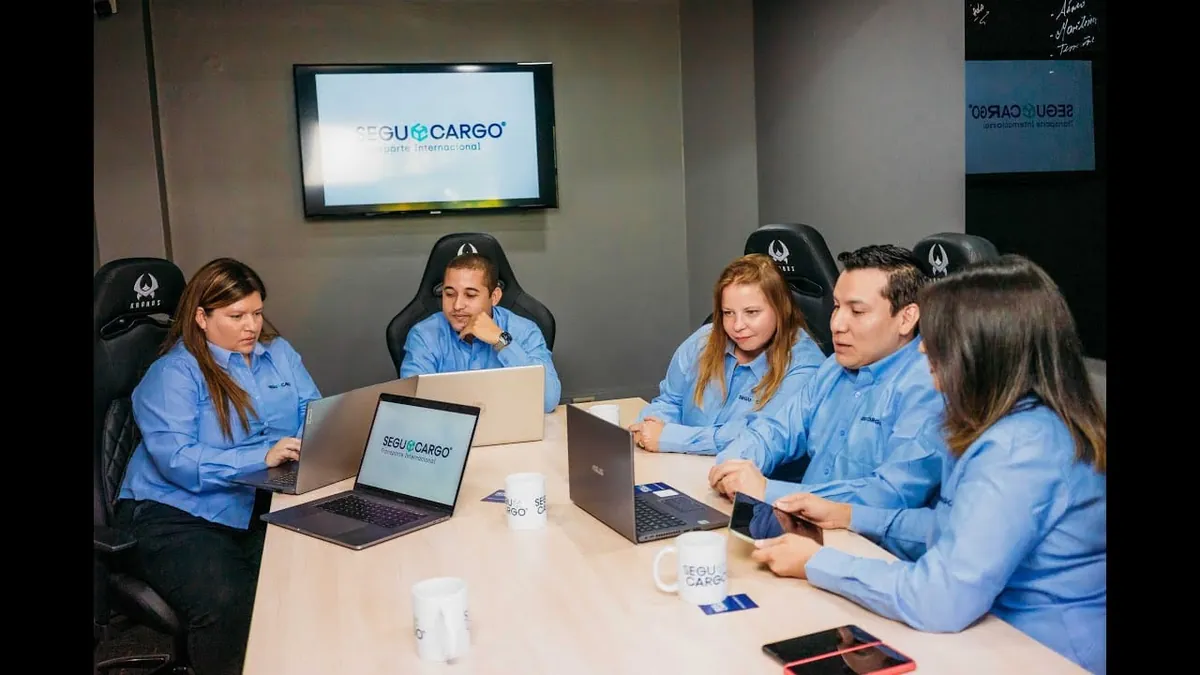
At Segucargo we run FCL and LCL imports for online stores bringing stock from Asia, North America and Europe into Chile, and we quote within 24 hours. The service includes booking with the shipping line, consolidation for smaller volumes, the import documentation set, coordination with your customs broker, and delivery to your warehouse or 3PL. If you are scaling past occasional courier parcels into recurring container volumes, request a quote and we will size the right mode — LCL, FCL or air — for your order cycle.
What a Forwarder Actually Does for an Online Store
A freight forwarder is not the airline or the shipping line — it is the party that arranges space on their vessels or aircraft on your behalf, often at better rates than a single small shipper could get alone, because forwarders buy capacity in bulk across many clients. For an e-commerce importer, the practical value shows up in three places:
- Consolidation. If your supplier ships two pallets rather than a full container, a forwarder groups your cargo with other shippers' cargo (LCL) so you pay for the space you actually use.
- Documentation. Commercial invoice, packing list, bill of lading or air waybill, and certificate of origin where a trade agreement applies — a forwarder checks these match before the cargo sails, which is when most customs delays actually start.
- Customs coordination. In Chile, formal commercial imports go through a licensed agente de aduana; the forwarder hands that broker a clean, matched document set instead of a scramble once the container is already on the water.
FCL vs. LCL: Which Fits a Growing Online Store
Most e-commerce importers start with LCL (less than container load) because early order volumes don't fill a 20-foot or 40-foot container. LCL charges you by volume (CBM) rather than for the whole box, so a pallet or two of product is affordable to ship regularly. As reorder volume grows, FCL becomes cheaper per unit once you're routinely filling roughly 60% or more of a container, because you stop paying the consolidation and deconsolidation handling fees that LCL carries at both ends. The practical signal to watch is your landed cost per unit: if it keeps falling as your order size grows, you've likely crossed into FCL territory. We cover the cost mechanics in more detail in our guide to FCL vs. LCL shipping to Chile.
Customs, Duties and IVA on Commercial Imports to Chile
Commercial cargo imported into Chile is subject to Chile's general ad valorem customs duty — commonly 6% on the CIF value — unless your goods qualify for 0% under one of Chile's free trade agreements, which currently cover major sourcing markets including the United States, the European Union, China, and most of Latin America. On top of any duty, Chile applies its standard 19% IVA (value-added tax) on the CIF value plus duties. A licensed customs broker calculates and settles both at clearance; your freight forwarder's job is to make sure the invoice values, HS codes, and certificates of origin that broker needs arrive complete and consistent with the bill of lading, since mismatches — not the tax rates themselves — are what hold shipments at the port. Sellers moving from occasional courier parcels into container volumes should plan for this formal clearance process rather than the simplified treatment some courier and low-value parcel regimes use.
How to Choose a Forwarder as an Online Seller
The criteria differ slightly from a traditional importer because order cadence and SKU count matter more than they do for a one-off industrial shipment. When you evaluate a forwarder for recurring e-commerce replenishment, ask specifically about:
- Consolidation schedules from your supplier's port or city, and how often LCL groupage actually sails on that lane.
- Whether they can track multiple purchase orders from the same supplier separately through to your warehouse, so partial shipments don't get mixed up.
- Their working relationship with a customs broker who clears e-commerce-pattern cargo (many small SKUs) routinely, not only bulk commodity shipments.
- Visibility: can you see shipment status without emailing someone, and does that match the pace your store's replenishment planning needs?
We go through the full evaluation checklist, including questions to ask before signing with anyone, in how to choose a freight forwarder in Chile. If cost is your main constraint at this stage, our breakdown of forwarder cost in Chile explains what you're actually paying for beyond the ocean or air rate itself.
FAQ
Can I import for my online store without a forwarder?
For occasional courier parcels, yes — many sellers start that way. Once you're placing recurring purchase orders large enough to need LCL or FCL ocean freight, going direct to a shipping line without a forwarder is possible in theory but rarely practical: you lose consolidation pricing, you handle documentation and customs coordination yourself, and you have no single point of contact when a shipment runs into a problem mid-transit.
How early should an e-commerce business bring in a forwarder?
As soon as a single purchase order is large enough to consider LCL rather than courier — typically once you're ordering by the pallet rather than by the box. Bringing a forwarder in before your first ocean shipment, rather than after a problem with one, lets them flag documentation issues with your supplier before the cargo sails.
Does a forwarder also handle the last-mile delivery to my warehouse?
Most forwarders operating in Chile, including Segucargo, arrange the inland transport from the port to your warehouse or 3PL as part of the import service, so you receive the cargo ready to receive into inventory rather than having to arrange a separate trucking leg yourself.
What's the difference between a forwarder and a customs broker?
A forwarder arranges the transport — booking space, consolidating cargo, and managing documentation. A customs broker (agente de aduana) is the licensed party that files the import declaration and settles duties and IVA with Chilean customs. In practice, your forwarder coordinates directly with the broker so you deal with one point of contact instead of two separate vendors.
Ready to move your store's next purchase order? Talk to Segucargo about an FCL, LCL or air import quote for your Chile-bound inventory.
Shipping to or from Chile?
Free quote, no commitment · We reply within 24 business hours